
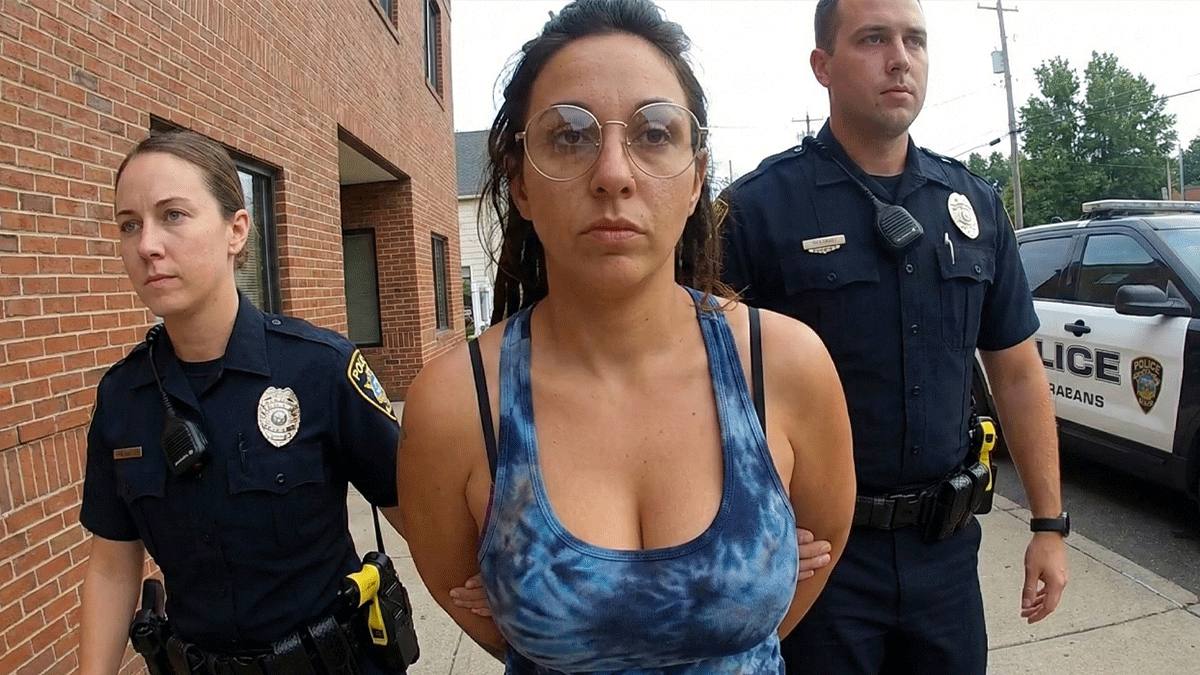

This dramatic Target Shoplifting Arrest in Middletown, New Jersey, began as a traffic stop but quickly uncovered a sophisticated barcode switching scheme involving children. On July 26, 2024, Officer Courtney and a Sergeant from the Middletown Police Department stopped Halayna Koehn after Target security reported suspicious activity. What officers found wasn’t just stolen merchandise, but a vehicle so dangerous police called it a “death trap”.
Table of Contents
Watch: Target Shoplifting Arrest Caught on Camera
Note: Pay close attention to the timestamp at 00:33:12 where the officer reveals they have video evidence of the barcode switching.
Full Story: How the Incident Unfolded
The Stop and Denial
The incident started when Middletown Police pulled over a vehicle leaving a Target store. The officers informed the driver, Halayna Koehn, that Target’s security team, known as Loss Prevention, had called them. They suspected she had taken items without paying properly.
Koehn initially denied everything. She told the officers, “I didn’t… I don’t have anything,” and claimed she only bought cat food. The officer remained calm but firm, explaining that Target has a “really good video system” and they were going to verify the footage.
The Investigation Heats Up
While one officer spoke to Koehn, another officer went to the Target store to watch the security footage. Koehn appeared nervous, telling the officer, “I’m just scared”.
The situation escalated when the officer returned with information from the video. He confronted Koehn directly. “I picked up a pack of Pokemon cards… Did you switch out the barcodes on them? The video showing that,” the officer stated .
The investigation revealed that this wasn’t a one-time event. Police noted that Koehn had been hitting Target and ShopRite stores frequently, sometimes “twice a day”. The officer explained that stores use facial recognition and build a case over time until the dollar amount is high enough for serious charges .
The “Death Trap” Vehicle
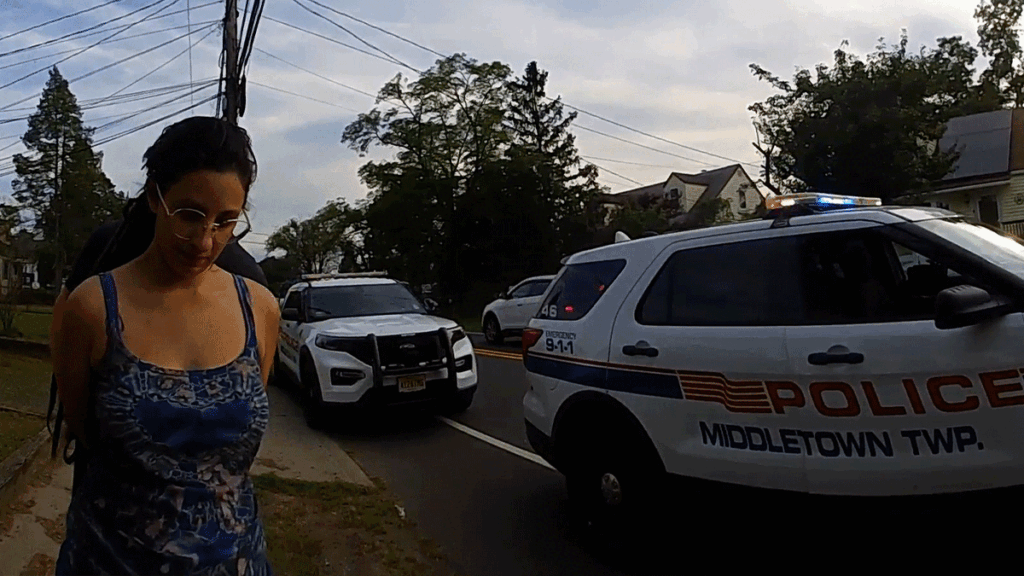
As the investigation continued, the officers noticed the terrible condition of Koehn’s car. The windshield was cracked. More disturbingly, Koehn admitted the car had “no power steering” and a hole in the steering wheel fluid line.
She also mentioned the brakes were bad. The officer was shocked she was driving it with children inside, telling her, “That thing is a danger… You gotta figure that out”. The vehicle was in such poor shape that officers had to assist in parking it safely off the road.

The Arrest: Charges Against Halayna Koehn
Police arrested Halayna Koehn on the spot. The investigation revealed she allegedly used her children during the theft, leading to a serious charge of employing a juvenile in a crime.
| Charge | Simple Explanation | Potential Penalty (US) |
| Shoplifting (3rd Degree) | Taking merchandise worth between $500 and $75,000 without paying. | Up to 3-5 years in prison; fines up to $15,000. |
| Employing Juvenile in Crime (4th Degree) | Using a person under 17 to help commit a criminal offense. | Up to 18 months in prison; fines up to $10,000. |
Did you know? You can check arrest records for anyone in your neighborhood instantly. [Search Public Records Here]
Legal Analysis: Was the Target Shoplifting Arrest Justified?
Fourth Amendment Check
The stop appears legally justified based on “Reasonable Suspicion.” The police received a direct report from Target Loss Prevention (a reliable informant in this context) stating a specific crime had just occurred involving that vehicle. The cracked windshield also provided a secondary probable cause for the traffic stop.
The “Barcode Switching” Evidence
Shoplifting laws in New Jersey (N.J.S.A. 2C:20-11) cover more than just hiding items in a purse. Altering the price tag or transferring merchandise to a different container is considered shoplifting.
In this case, the officer cited video evidence showing Koehn switching barcodes on “Blaster packs” of Pokemon cards to pay a lower price . This specific act is “Under-ringing,” a common form of retail theft. The officer noted the items were valued at roughly $104.99 but were scanned for much less.
Police Protocol
The officers followed standard protocol. They separated the parties (Koehn and her boyfriend) to prevent collusion. They verified the story with video evidence before making an arrest. Notably, the officers showed significant discretion and care for the children, ensuring they were safe and arranging for a pickup rather than involving Child Protective Services immediately.
[Read more Evidence Decode investigations here]
5 simple, general FAQs related to the charges in the Halayna Koehn case, based on the police report
Is switching barcodes considered the same as stealing?
Yes. Under the law, shoplifting isn’t just hiding items in a bag. It includes altering, transferring, or removing any label or price tag to pay less than the full value. In this case, the suspect was accused of “switching out the barcodes” on Pokemon cards to pay a cheaper price. This is legally treated as theft because the intent is to deprive the store of the item’s full value.
Why was this considered a 3rd-degree crime instead of a minor ticket?
It comes down to the dollar amount. In New Jersey, if the full retail value of the stolen merchandise is between $500 and $75,000, it becomes a 3rd-degree crime (a felony). The police report notes that the suspect committed acts on multiple dates (June 17, June 19, July 6, July 7, and July 26) which totaled an amount greater than $500.
What does the charge “Employing a Juvenile in a Crime” mean?
This charge (N.J.S.A. 2C:24-9A) is filed when an adult uses a person under 17 years old to help commit a crime or brings them along to facilitate it. The police report states the suspect brought a male juvenile and a female juvenile to the Target store while she committed shoplifting. It is a serious separate offense, classified as a 4th-degree crime in this case.
Can stores really “build a case” against you over time?
Yes. The police officer in the transcript explained that retailers like Target and ShopRite track repeat offenders. He stated, “They’ll pull up your face in all the stores… and they can see everything you’ve ever done”. They wait until the total stolen amount crosses a certain threshold (like $500) to press felony charges rather than minor misdemeanor charges for each small theft.
What are the potential penalties for these charges?
3rd Degree Shoplifting: This is an indictable offense (felony) which can carry a prison sentence of 3 to 5 years in New Jersey.
4th Degree Employing a Juvenile: This is also an indictable offense punishable by up to 18 months in prison.
Note: Actual sentences vary based on criminal history and plea deals, but these are the maximums allowed by law for the degree of crimes listed in the report.
Conclusion & Current Status
Halayna Koehn was processed at Middletown Police Headquarters. She was charged with 3rd-degree shoplifting and 4th-degree employing a juvenile. The total theft across multiple dates (June 17, 19, July 6, 7, and 26) was calculated to be greater than $500.
Her vehicle was left parked at the scene due to its dangerous condition, and her children were released to the custody of her boyfriend and mother.
Download Police Report click here.
Disclaimer: All suspects are presumed innocent until proven guilty in a court of law. This report is based on official police records.
Don’t Rely on Their Word Alone In this case, conflicting stories led to an arrest. The only way to prove your innocence in a traffic stop is with your own 4K evidence. Protect yourself this holiday season. 🎄 Click Here