


A volatile Sea Bright disorderly conduct arrest exploded into a viral spectacle when a patron at a high-end waterfront restaurant refused to leave, citing family connections and refusing police orders.
The incident, which occurred at McLoone’s Rum Runner in Sea Bright, New Jersey, showcases a classic escalation from a simple trespassing complaint to a full custodial arrest. The suspect, identified as Arielle Bari Gulywasz , stunned officers with a barrage of erratic claims—ranging from her grandfather’s alleged influence to bizarre assertions about being a “prisoner of war”.
This report breaks down exactly how a quiet evening at the Jersey Shore turned into a major police incident.
Table of Contents
Watch: Sea Bright Disorderly Conduct Arrest Caught on Camera
Note: Pay close attention to the timestamp at 00:18:16 where the situation escalates from a conversation to handcuffs being deployed.
Full Story: How the Incident Unfolded
The chaos began just after 5:18 PM on January 18, 2023. Officers from the Sea Bright Police Department were dispatched to McLoone’s Rum Runner on Ocean Avenue following reports of a disorderly female.
The Initial Confrontation
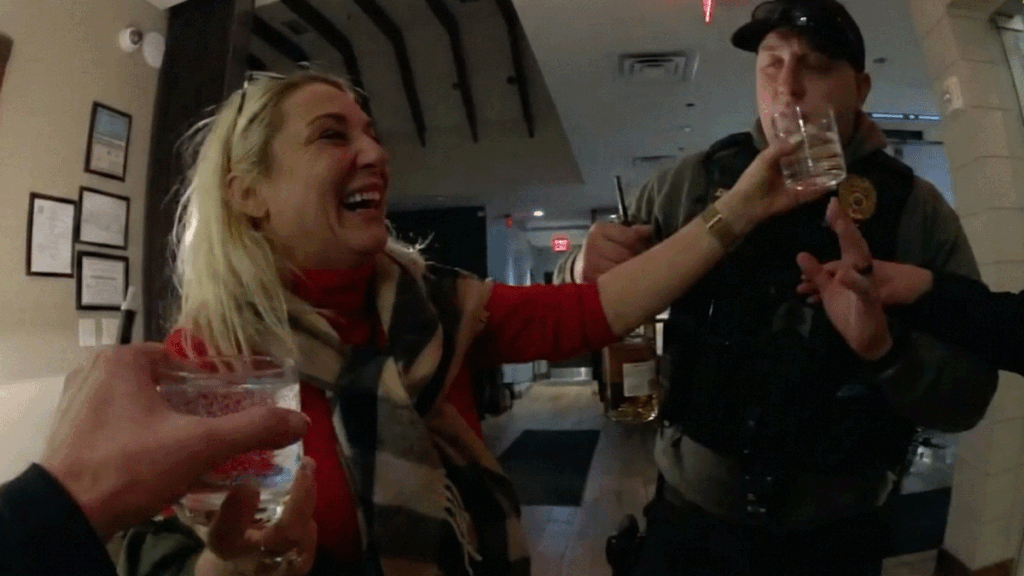
According to the police report, the caller stated a woman with blonde hair, wearing a red sweater, was yelling inside the establishment and refusing to leave. Upon arrival, Officer Taylor and Detective Sergeant Murphy met with the manager, who confirmed the woman was causing a disturbance.
When officers approached Gulywasz, she initially began walking out of the bar area but remained argumentative. The situation quickly deteriorated in the parking lot.
“My Grandfather Has Your License”
The bodycam transcript reveals a tense exchange. Gulywasz repeatedly refused to identify herself properly or leave the premises effectively. She invoked her family connections, telling officers, “My grandfather… he spends like, half of this budget” and later threatening, “My grandfather will take your driver’s license”.
Despite being given multiple opportunities to leave via Uber or with a friend who was present at the scene, she refused. She insisted, “I’m not going to leave… I didn’t do nothing wrong”.
The Refusal to Comply
Officers demonstrated patience, repeatedly asking her to call a ride. “I’m going to give you one shot to call somebody to pick you up,” an officer warned her later, emphasizing the gravity of the situation.
However, in the parking lot, she refused to exit her friend’s vehicle when asked, leading officers to guide her out. The tipping point arrived when she continued to argue and refused to disperse. Officer Murphy informed her she was being arrested for disorderly conduct and trespassing. Even while being placed in the patrol vehicle, she attempted to exit, forcing officers to physically seatbelt her in.
The Arrest: Charges Against Arielle Gulywasz
The Sea Bright disorderly conduct arrest resulted in two specific charges filed against the suspect. Below is a breakdown of the offenses based on the police report.
| Charge | Simple Explanation | Potential Penalty (NJ)* |
| Criminal Trespass (2C:18-3.B) | Remaining on property after being told to leave by an owner or police. | Up to 30 days in jail / $500 fine (Petty Disorderly). |
| Disorderly Conduct (Local 91-2M) | Improper behavior causing public inconvenience, annoyance, or alarm. | Fines and potential short jail time depending on municipal codes. |
*Penalties are estimates based on New Jersey statutes for petty disorderly persons offenses.
Legal Analysis: Was the Sea Bright Disorderly Conduct Arrest Justified?
In analyzing the Sea Bright disorderly conduct arrest, we must look at the legal standards for trespassing and disorderly conduct in New Jersey.
Fourth Amendment & Probable Cause
The officers appear to have established clear probable cause. The restaurant manager explicitly communicated to the officers that the “female needs to leave”. Under New Jersey law (N.J.S.A. 2C:18-3), a person commits a defiant trespass if they remain in a place knowing they are not licensed to be there.
Once the manager revoked her permission to be on the premises, her continued presence—and refusal to leave the parking lot—satisfied the elements of the statute.
Police Protocol and De-escalation
The transcript shows officers attempting de-escalation for several minutes. They offered her the chance to take an Uber or ride with a friend.
- Officer Quote: “We tried to try to do the right thing… You had your chance.”.
- Suspect Response: “I don’t need them to let me go… I want you as I am.”.
By providing alternatives to arrest, the officers likely strengthened their case, proving that the arrest was a last resort after the subject refused to voluntarily terminate the encounter.

[Read more Evidence Decode investigations here]
5 FAQs that are relevant to the topic of disorderly conduct and trespassing laws
Can a restaurant legally kick you out if you haven’t finished your meal?
Yes. In the United States, private businesses have the right to refuse service to anyone, as long as the reason is not based on discrimination against a protected class (such as race, religion, or disability). If a manager asks you to leave because of your behavior and you refuse, you can be charged with trespassing, regardless of whether you have paid or finished eating.
What constitutes “Disorderly Conduct” in most states?
Disorderly conduct is a broad charge that typically covers behavior that disturbs the public peace or causes alarm. Common examples include fighting, unreasonable noise, using offensive language in a public place to incite violence, or blocking traffic. It is often a “catch-all” charge used when a person is acting erratically or refuses to calm down.
Is it illegal to curse at a police officer?
Generally, no. Under the First Amendment, simply cursing at an officer is often protected as free speech. However, if the cursing is accompanied by aggressive physical behavior, threats, or if it incites a crowd to violence (known as “fighting words”), it can cross the line into illegal disorderly conduct or obstruction of justice.
What is the difference between “Civil Trespass” and “Criminal Trespass”?
Civil trespass usually involves a lawsuit between two private parties (like a neighbor building a fence on your land). Criminal trespass occurs when a person knowingly enters or remains on a property without permission—often after being explicitly told to leave by the owner or police. Criminal trespass carries the risk of arrest, fines, and jail time.
Do I have to show my ID to police if I am in a private business?
It depends on the state laws and the situation. In many “Stop and ID” states, you are required to identify yourself if officers have “reasonable suspicion” that a crime has occurred (such as trespassing or disorderly conduct). If business staff have accused you of a crime, refusing to identify yourself can sometimes lead to further charges or a prolonged detention.

Conclusion & Current Status
Following the transport to headquarters, Gulywasz was processed. The situation remained bizarre even at the station, where she referred to herself as a “prisoner of war”.
She was eventually released to the custody of her friend, Scott Disarno Jr., the same friend she had earlier refused to leave with. She was issued two summonses and was scheduled for a court appearance via Zoom on February 2nd.
This case serves as a stark reminder that refusing a business’s request to leave—and subsequently refusing police orders—is a fast track to a criminal record, regardless of who your grandfather is.
Download Police Report click here.
Disclaimer: All suspects are presumed innocent until proven guilty in a court of law. This report is based on official police records and bodycam transcripts.
Don’t Rely on Their Word Alone In this case, conflicting stories led to an arrest. The only way to prove your innocence in a traffic stop is with your own 4K evidence. Protect yourself this holiday season. 🎄 Click Here