
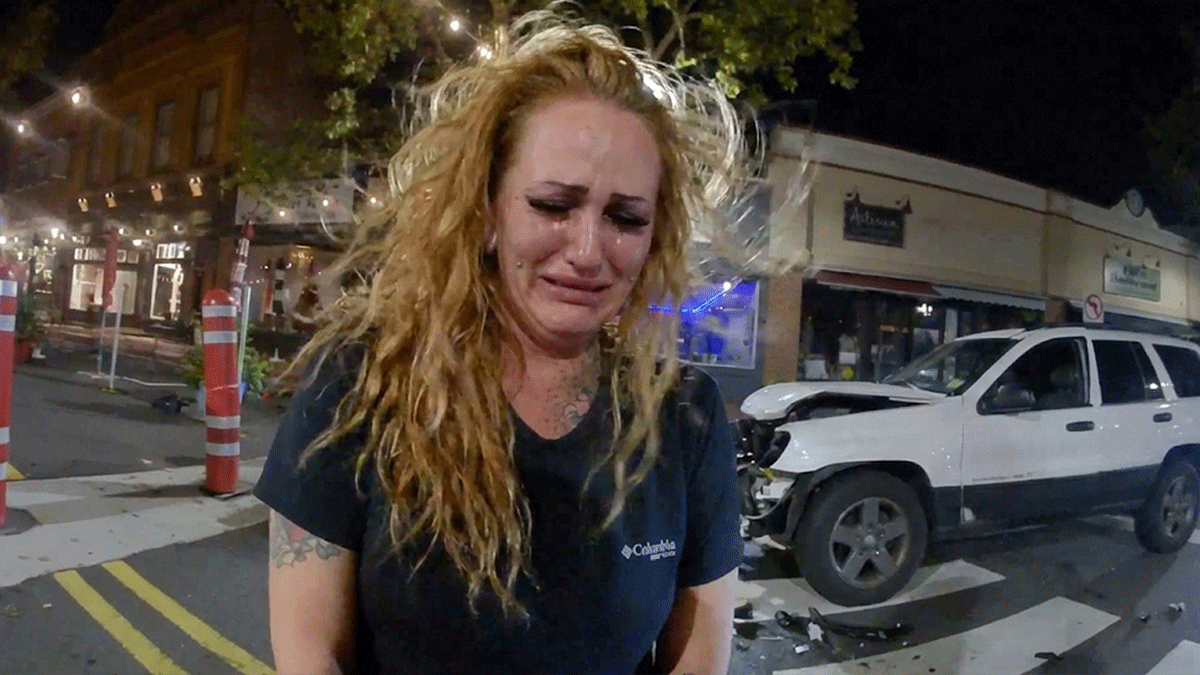

The Red Bank DWI arrest of Emily Wilson spiraled into an emotional confrontation after police responded to a late-night car crash on Broad Street.
What started as a routine accident investigation in Red Bank, New Jersey, quickly escalated when the driver claimed this was her “first time out in ten years” before struggling through sobriety tests. The incident, captured on officer body cameras, highlights the harsh reality of impaired driving investigations.
Table of Contents
Watch: Red Bank DWI Arrest Caught on Camera
Note: Pay close attention to the timestamp at 00:14:05 where the suspect appears to admit her condition just before the handcuffs come out.
Full Story: How the Incident Unfolded
The Crash Scene
On August 28, 2023, at approximately 2:33 AM, Red Bank Police Officer Jhonatan Quispe was dispatched to Broad Street and White Street. The call came in as a motor vehicle accident involving a potential DWI.
Upon arrival, officers found a chaotic scene. A car was reportedly “broken down” and needed towing. The driver, identified as Emily Wilson, initially told officers she was “100% okay” and refused medical attention. However, the situation was far from normal.
Emotional Rollercoaster
Wilson appeared visibly distressed. She told the officer, “I’m just really sad,” and claimed, “It’s my first time out in ten years”.
The officer tried to keep her calm. He asked her to step away from the vehicle to conduct standard tests. Wilson became defensive. She mentioned her family connections, stating, “My sister works for [a] towing company and my brother is a police officer”.
The Failed Tests
Officer Quispe attempted to administer Field Sobriety Tests (FSTs). The first test involved following a pen with her eyes. Wilson argued she couldn’t do it properly because she was “colorblind” and wearing contact lenses.
Note: Colorblindness generally does not affect the Horizontal Gaze Nystagmus (HGN) test, which looks for involuntary eye jerking.
The situation worsened when the officer demonstrated the “Walk and Turn” test. Wilson struggled to follow instructions. When asked to place her feet together, she asked for a break, saying, “I just want you guys to give me a break”.
The Admission and Arrest
The turning point occurred around the 14-minute mark of the encounter. After failing to complete the instructions for the walking test, a voice on the recording—attributed to the interaction with Wilson—states, “All right. I am hammered”.
The officer immediately moved to arrest. Wilson began to beg, pleading, “No no no… You ruin my life”. She resisted as officers placed her in the patrol car, asking, “Why are you here now?” and refusing to enter the vehicle calmly.
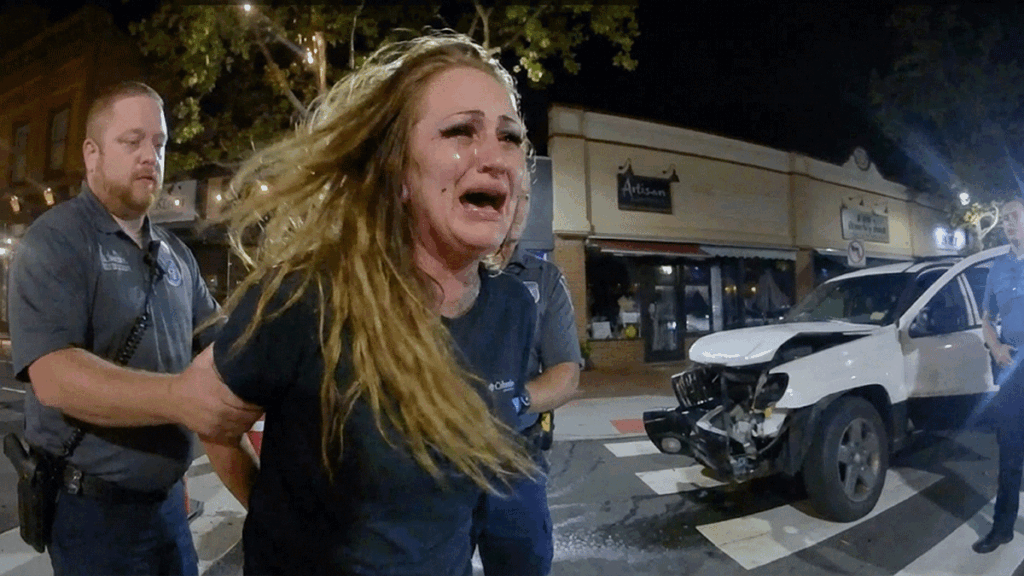
The Arrest: Charges Against Emily Wilson
Based on the police report and the events at the scene, Wilson was taken into custody.
| Charge | Simple Explanation | Potential Penalty (NJ) |
| 2100 D.W.I. | Driving While Intoxicated. Operating a vehicle with a BAC of 0.08% or higher, or under the influence of drugs/alcohol. | License suspension, fines ($250-$400+), potential ignition interlock device, and up to 30 days jail for first offense. |
| MV Accident | Involvement in a motor vehicle crash. | Fines, insurance surcharges, and liability for damages. |
Legal Analysis: Was the Red Bank DWI Arrest Justified?
1. The Probable Cause for the Stop
Police were dispatched to a verified motor vehicle accident. In New Jersey, an accident gives police the immediate right to detain the driver for investigation. This is not a random traffic stop; the crash itself provides the “reasonable suspicion” needed to investigate impairment.
2. The Field Sobriety Tests (FSTs)
Officer Quispe followed standard protocol by requesting FSTs after observing behavior consistent with impairment (sadness, confusion, accident).
- The “Colorblind” Defense: Wilson claimed she was colorblind during the eye test. Legally, this is rarely a valid defense for the HGN test. The test measures nystagmus (eye twitching), not color recognition.
- Refusal/Inability to Perform: Wilson eventually stopped trying to perform the tests, asking for a break instead. In many jurisdictions, the inability to follow simple instructions is considered evidence of impairment.
3. The Admission
If the statement “I am hammered” is admissible in court, it serves as a direct confession. Combined with the accident and the failed attempts at physical tests, this provides strong probable cause for the arrest.
[Read more Evidence Decode investigations here]
5 FAQs connected to the charges and events in the Emily Wilson case
Does mentioning family members in law enforcement help avoid a DWI arrest?
Generally, no. While some drivers believe “professional courtesy” might let them off with a warning, officers are trained to follow protocol, especially when there is a motor vehicle accident involved or body cameras are rolling. Attempting to use family connections can sometimes escalate the situation or appear as an attempt to intimidate the officer.
Can medical conditions like “colorblindness” invalidate a Field Sobriety Test?
No. The Horizontal Gaze Nystagmus (HGN) test checks for involuntary jerking of the eye (nystagmus), not the ability to see colors. Officers look at the motion of the pupil as it follows a stimulus (like a pen tip). Being colorblind does not prevent the eye from tracking an object or prevent nystagmus from appearing if a person is impaired.
Can extreme emotions (crying or sadness) be mistaken for intoxication?
Officers are trained to distinguish between stress and impairment, but they often overlap. Slurred speech, confusion, and unsteadiness can be caused by shock, but they are also primary indicators of intoxication. If a driver fails physical tests (like the Walk and Turn), officers typically rely on those objective physical clues rather than the driver’s emotional explanation.
Is a verbal admission (like “I am hammered”) admissible in court without a breathalyzer?
Yes, “excited utterances” or voluntary admissions captured on body cam are powerful evidence. Even if a breathalyzer result is later thrown out or refused, a clear verbal confession recorded at the scene can be enough for a conviction, as it corroborates the officer’s observations of impairment.
Does refusing medical attention after a crash make a driver look suspicious?
Not necessarily, but it documents the suspect’s state of mind. Officers ask about injuries to ensure safety and to rule out a concussion as the cause of “drunk-like” behavior. By confirming she was “100% okay” and “not injured”, the suspect inadvertently removed a potential legal defense that her poor performance on tests was due to a head injury from the crash.
Conclusion & Current Status
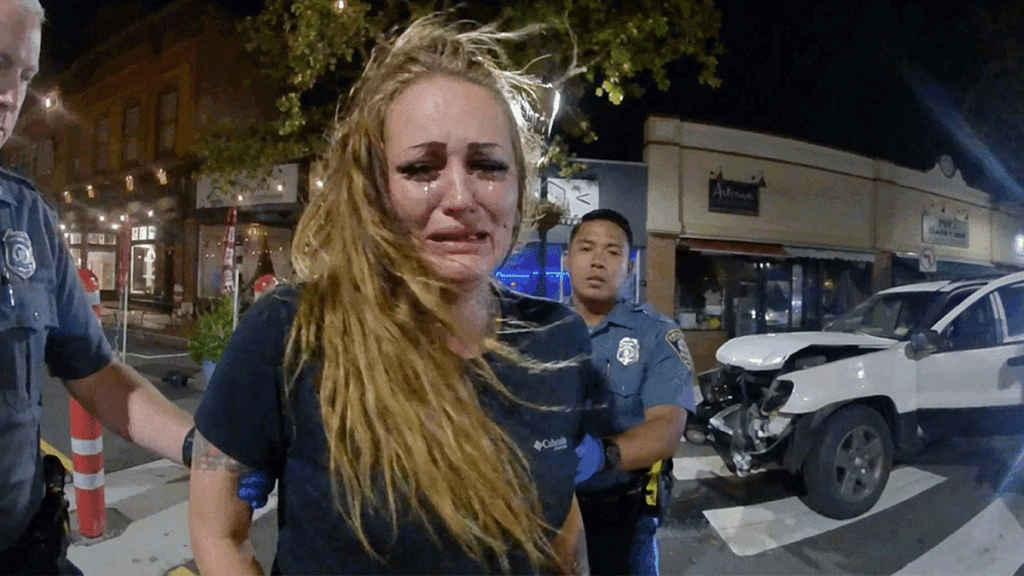
The incident concluded with Emily Wilson being cleared by adult arrest. The police report indicates the case status is “Arrest” and cleared by “CAA” (Cleared by Adult Arrest).
This Red Bank DWI arrest serves as a stark reminder: emotional pleas and family connections to law enforcement rarely stop a DWI investigation once an accident has occurred.
Download Police Report click here.
Disclaimer: All suspects are presumed innocent until proven guilty in a court of law. This report is based on official police records.
Don’t Rely on Their Word Alone In this case, conflicting stories led to an arrest. The only way to prove your innocence in a traffic stop is with your own 4K evidence. Protect yourself this holiday season. 🎄 Click Here