
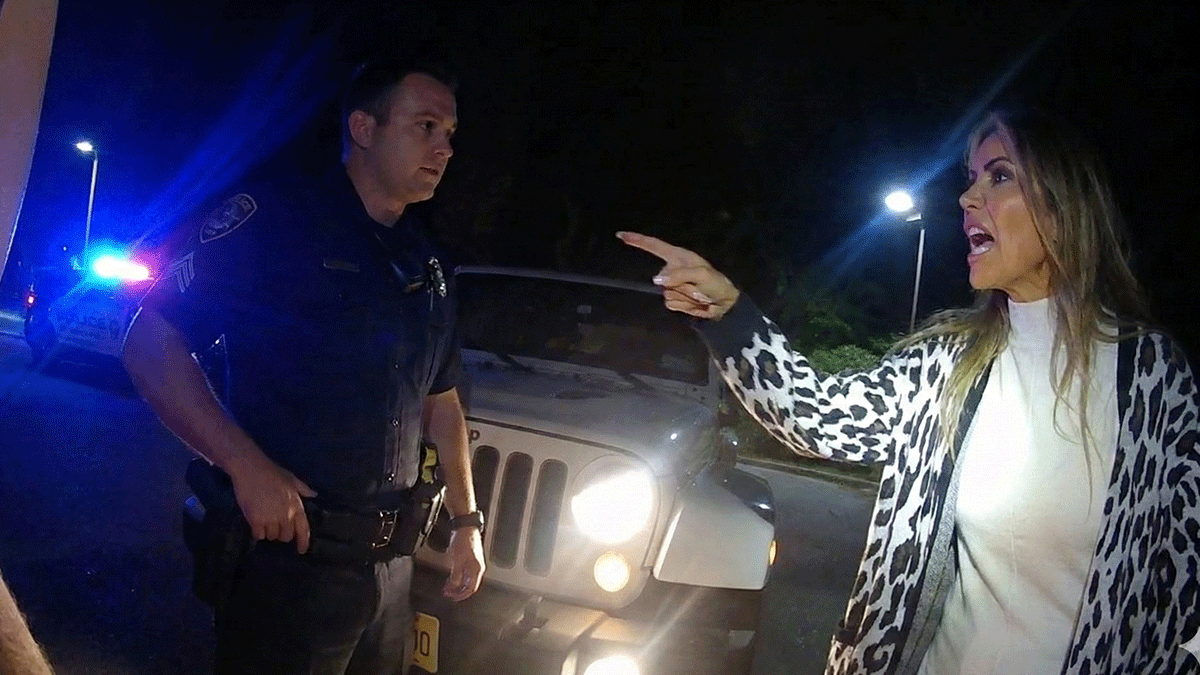

A routine Middletown sobriety checkpoint arrest quickly spiraled into a complex legal case on a Friday night in New Jersey. What began as a standard stop at the Monmouth County DWI Strike Force Checkpoint ended with handcuffs and a refusal to submit to breath testing. This incident highlights exactly how quickly a “few drinks” can turn into a life-changing legal event.
Table of Contents
Watch: Middletown Sobriety Checkpoint Arrest Caught on Camera
Note: Pay close attention to the timestamp at 00:04:53 where the suspect attempts the “One Leg Stand” test and the situation escalates rapidly.
Full Story: How the Incident Unfolded
The incident occurred late on September 22, 2023. Officers were stationed at 75 State Route 35 North in Middletown, New Jersey. They were operating a designated DWI checkpoint to check drivers for impairment.
The Initial Stop Around 10:35 PM, a white 2016 Jeep Wrangler slowly approached the checkpoint. Officer Eric Van Schaack signaled the driver to stop. The driver was identified as 50-year-old Vanessa Reiser.
As soon as the window rolled down, the officer noticed red flags. He reported a “strong odor of an alcoholic beverage” coming from the driver. Her eyes appeared bloodshot and watery, and her eyelids were droopy.
The Admission When asked where she was coming from, Reiser hesitated. She first said, “a friend’s”. Later, she changed her story and said she was coming from Red Bank.
The officer asked the critical question: How much had she had to drink? Her response was specific: “Two drinks”.
Failing the Field Tests The officer asked Reiser to exit the vehicle for a secondary inspection in the side parking lot. He activated his body-worn camera to record the Middletown sobriety checkpoint arrest process.
- The Alphabet Test: Reiser was asked to recite the alphabet from D to a specific letter. She reportedly mumbled at the end of the test.
- The Walk and Turn: Reiser removed her high heels for this test. The officer instructed her to take nine steps, heel-to-toe. The report states she started before being told to begin. When she did walk, she missed heel-to-toe on all steps and twisted her feet during the turn.
- The One Leg Stand: This was the final straw. Reiser swayed from side to side and raised her arms for balance. She put her foot down three times.
The officer stopped the test for her safety. She was placed in handcuffs and arrested at 10:35 PM.
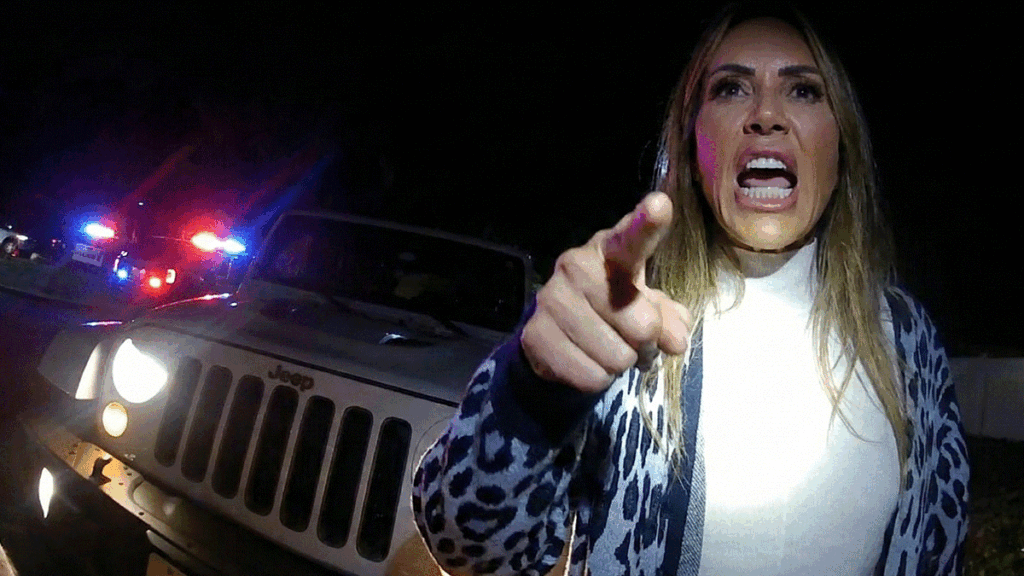
The Arrest: Charges Against Vanessa Reiser
Following the field tests, Reiser was transported to police headquarters. The situation worsened when she was asked to submit to a breathalyzer test (Alcotest).
According to the report, she replied, “I want to talk to my lawyer”. In New Jersey, this is often treated as a refusal if a breath sample is not provided immediately.
| Charge | Simple Explanation | Potential Penalty (US/NJ) |
| 39:4-50 | Driving While Intoxicated (DWI) | License loss, fines, potential jail time. |
| 39:4-50.2 | Refusal to Submit to Breath Test | Automatic license revocation (7mo – 1yr), fines. |
| 39:4-96 | Reckless Driving | Points on license, fines, possible jail (up to 60 days). |
| 39:3-29c | Failure to Possess Documents | Fine (usually for missing license/registration/insurance). |
Legal Analysis: Was the Middletown Sobriety Checkpoint Arrest Justified?
Fourth Amendment Check Sobriety checkpoints are generally legal under the US Constitution, provided they follow strict neutral guidelines. In this Middletown sobriety checkpoint arrest, the stop was part of the “Monmouth County DWI Strike Force,” which suggests a planned, administrative operation. The initial stop was brief, and the officer’s request for a secondary screening was based on specific observations: the odor of alcohol and bloodshot eyes. This likely satisfies the “reasonable suspicion” needed to detain a driver for further testing.
The “Refusal” Complication Reiser asked to speak to a lawyer when asked to blow into the Alcotest. In many states, including New Jersey, the “implied consent” law means drivers agree to breath testing just by using public roads. Unlike a police interrogation, you often do not have the right to delay a breath test to call an attorney. The officer recorded her response as a “Refusal”. This charge can sometimes be harder to fight than the DWI itself because the penalties are administrative and strict.
[Read more Evidence Decode investigations here]
5 FAQs connected to the charges and events in this case:
Do I have the right to speak to a lawyer before taking a breathalyzer test?
In many states, including New Jersey, the answer is generally no. Because alcohol dissipates from the blood quickly, “Implied Consent” laws often require you to submit to a breath test immediately upon request. In this specific case, the suspect repeatedly asked to talk to her lawyer instead of providing a sample, which the officer recorded as a refusal.
Are sobriety checkpoints actually constitutional?
Yes, but they must follow strict rules. The US Supreme Court has ruled that the public safety benefit of removing drunk drivers outweighs the minor intrusion on privacy. This arrest occurred at a planned “DWI Strike Force Checkpoint”, which is a legal, administrative police operation designed to check for impairment without needing individual probable cause for the initial stop.
Does removing high heels help during Field Sobriety Tests?
It is supposed to ensure fairness, but it removes a common defense. If a driver fails the test while wearing heels, they could argue their shoes caused the imbalance. By allowing the driver to remove them—as the officer did for the suspect in this case —police eliminate footwear as an excuse for swaying or stepping off the line.
What is the “Implied Consent” law?
This is a legal concept where, by simply obtaining a driver’s license and driving on public roads, you automatically consent to chemical testing (breath or blood) if an officer suspects you of impairment. This is why the suspect was charged with “Refusal to Submit to Breath Test” (39:4-50.2) after failing to provide a sample.
Why is “Reckless Driving” charged alongside a DWI?
Officers often stack these charges because driving while intoxicated is inherently considered a “willful or wanton disregard” for the safety of others. Even if the driver wasn’t speeding excessively, the act of driving drunk can legally constitute recklessness. In this incident, the suspect received a separate citation for Reckless Driving (39:4-96) in addition to the DWI charge.
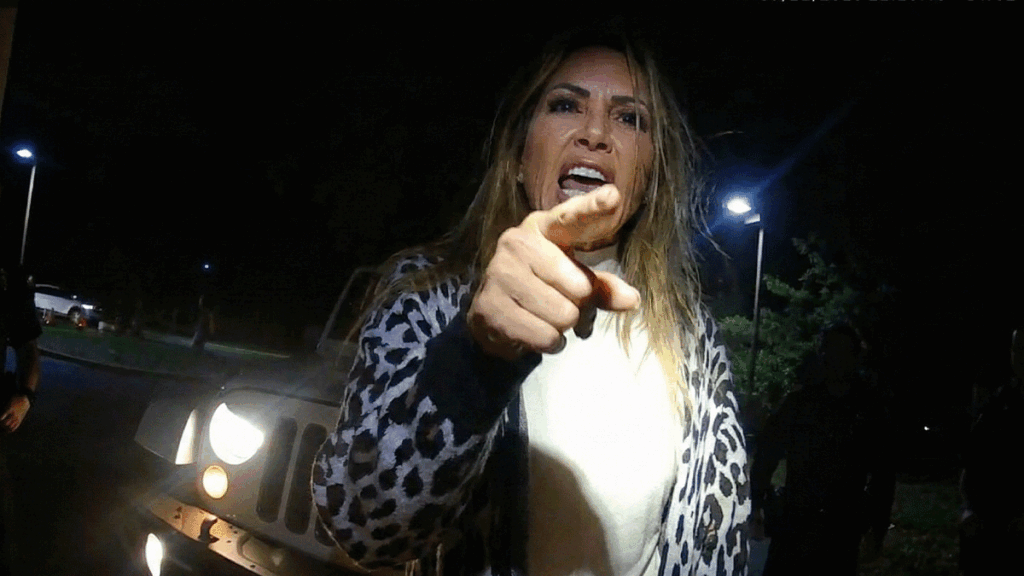
Conclusion & Current Status
Vanessa Reiser was processed at headquarters. Her vehicle was impounded and towed by AM/PM Towing. She was eventually released into the custody of her daughter, Savannah, pending a court appearance.
The case is set to be heard at the Middletown Township Municipal Court. The outcome will depend on whether the defense can challenge the administration of the field sobriety tests or the legality of the refusal charge.
Download Police Report click here.
Disclaimer: All suspects are presumed innocent until proven guilty in a court of law. This report is based on official police records.
Don’t Rely on Their Word Alone In this case, conflicting stories led to an arrest. The only way to prove your innocence in a traffic stop is with your own 4K evidence. Protect yourself this holiday season. 🎄 Click Here