
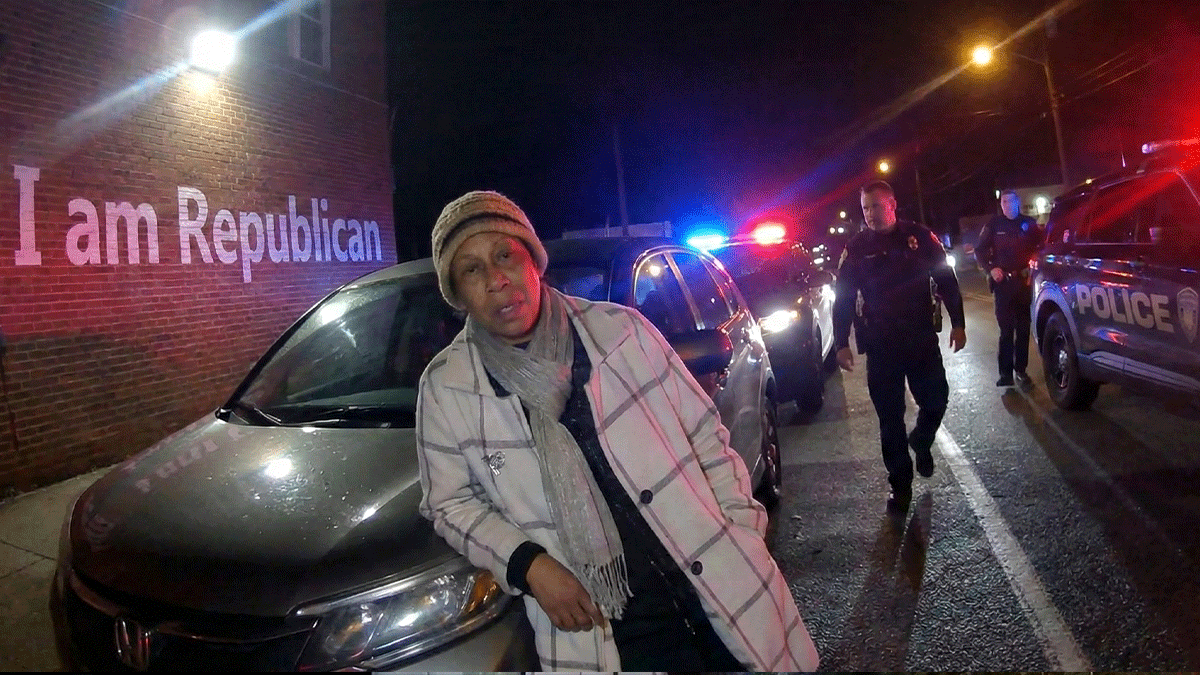

DWI Arrest Bodycam footage captures the moment a simple traffic stop in Highlands, New Jersey, spiraled into a major legal battle for one driver.
It started with a common excuse: “I had one glass of wine.” But official reports reveal a much different story involving erratic driving, confusing geography, and an open bottle of vodka found in the backseat.
This case highlights exactly how quickly police officers build probable cause for an arrest.
Table of Contents
Watch: DWI Arrest Bodycam Caught on Camera
Note: Pay close attention to the timestamp at 00:10:39 where the situation escalates. During the “One Leg Stand” test, the suspect begins counting in a highly unusual manner, skipping numbers and losing balance.
Full Story: How the Incident Unfolded
The incident began at 2:02 AM on February 28, 2024. Officer Connor of the Highlands Police Department was on patrol near State Route 36 North.
He spotted a blue 2017 BMW X1 drifting between lanes. The vehicle crossed the solid white line, failing to keep right. Officer Connor noted the car was traveling at erratic speeds. He clocked the driver doing just 27 mph in a 45 mph zone.
Officer Connor activated his lights and initiated the stop.
The “One Glass” Excuse
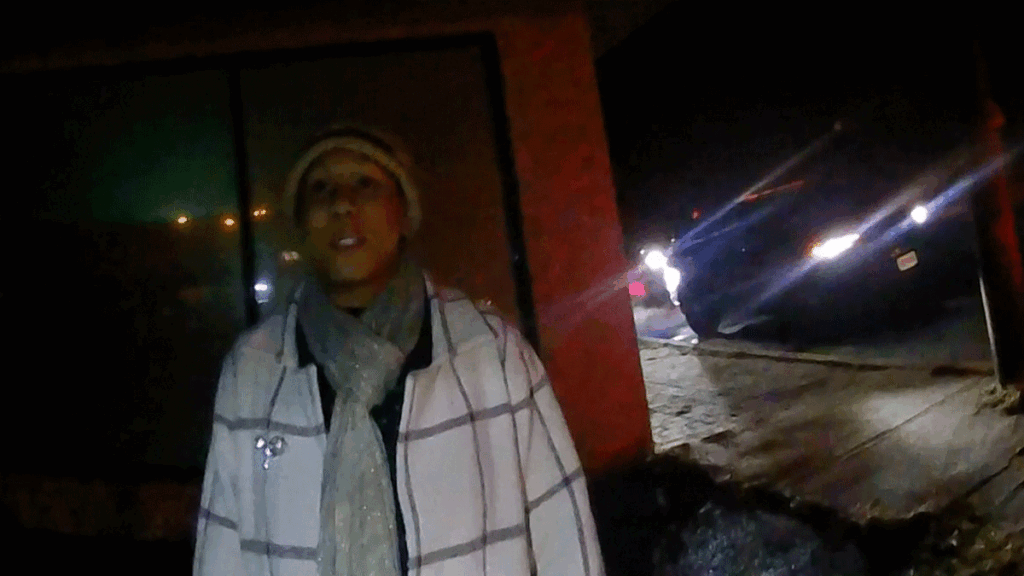
When Officer Connor approached the window, he was hit with a strong odor of alcohol coming from the vehicle. He identified the driver as Star Francis.
When asked if she had been drinking, Francis replied, “No I did honestly I had a glass of wine.” She claimed it was “just one glass” about an hour ago.
However, her travel story did not add up. She claimed she was driving from Point Pleasant to Asbury Park. Officer Connor noted that she was traveling in the complete opposite direction of her destination.
Failed Field Sobriety Tests
Due to the smell of alcohol and erratic driving, officers asked Francis to step out of the vehicle. The police report notes she was staggering as she walked to the testing area.
The DWI Arrest Bodycam transcript shows a struggle with basic instructions.
- The Alphabet Test: When asked to recite the alphabet, Francis failed two attempts, mixing up multiple letters.
- The Walk and Turn: Francis could not walk in a straight line. She missed heel-to-toe steps and used her arms for balance. Instead of following instructions, she walked backward during the test.
- The One Leg Stand: Francis swayed heavily and put her foot down multiple times. During the count, she gave a confusing response: “I’m going down to 2001, 5000.”
The Arrest: Charges Against Star Francis
Following the failed tests, officers placed Francis under arrest.
A subsequent search of her vehicle revealed a 1.75 Liter bottle of Smirnoff Vodka in a tote bag. The bottle was open and almost empty, with only about an inch of liquid remaining.
Francis now faces the following charges:
| Charge | Simple Explanation | Potential Penalty (US) |
| DWI | Driving While Intoxicated (Alcohol/Drugs). | License suspension, fines, potential jail time. |
| Reckless Driving | Driving with willful disregard for safety. | Fines, points on license, possible imprisonment. |
| Open Container | Possessing an open alcohol bottle in a car. | Fines and community service. |
| Refusal to Submit | Refusing a breathalyzer test. | Automatic license suspension, fines. |
| Failing to Keep Right | Drifting out of the proper travel lane. | Traffic fines and points. |
Did you know? You can check arrest records for anyone in your neighborhood instantly. [Search Public Records Here]
Legal Analysis: Was the DWI Arrest Bodycam Stop Justified?
Fourth Amendment Check
The initial stop appears legally sound based on the police report. The Fourth Amendment requires “Reasonable Suspicion” to pull a driver over. Officer Connor documented two specific traffic infractions:
- Lane Violation: The vehicle crossed the solid white line (NJ Title 39:4-82).
- Impeding Traffic: The driver was going 27 mph in a 45 mph zone (NJ Title 39:4-97.1).
These objective facts gave the officer the legal right to detain the vehicle.
Probable Cause for Arrest
To move from a traffic ticket to a DWI arrest, officers need “Probable Cause.” The DWI Arrest Bodycam audio and report provide clear evidence used to establish this:
- Odor: The “strong odor” of alcohol is a primary indicator.
- Admission: Francis admitted to drinking wine.
- Performance: The failure of standardized tests (SFSTs) validates the officer’s suspicion of impairment.
The Refusal Issue
At the station, Francis refused to provide a breath sample, stating “No, I disregard.”
- Police Protocol: In New Jersey, driving is a privilege that implies consent to chemical testing. Refusal often carries penalties equal to or clearer than a DUI conviction itself, including mandatory license loss.
[Read more Evidence Decode investigations here]
FAQs related to DWI laws and police procedures
What happens if I refuse a breathalyzer test in the US?
In most states, including New Jersey, driving is considered a privilege, not a right. Under “Implied Consent” laws, by operating a vehicle, you have already consented to chemical testing if an officer has probable cause. Refusing to blow into the device typically results in an automatic license suspension and fines, separate from any DWI charges.
Is it illegal to have an open bottle of alcohol in the car if I’m not drinking it?
Yes. “Open Container” laws generally prohibit the possession of any open alcoholic beverage in the passenger area of a vehicle. This applies even if the car is parked or if the bottle is in the back seat. To legally transport an open bottle, it usually must be stored in the trunk or a locked area inaccessible to the driver and passengers.
Do I have to perform the Field Sobriety Tests (walking the line, etc.)?
Laws vary by state, but in many jurisdictions, the Standard Field Sobriety Tests (SFSTs)—like the Walk-and-Turn or One-Leg Stand—are voluntary. However, declining them does not guarantee you won’t be arrested. Officers can still arrest you based on other evidence of impairment, such as erratic driving, the smell of alcohol, or slurred speech.
What constitutes “Probable Cause” for a police search?
Police cannot search your vehicle without a reason. “Probable Cause” exists when an officer has facts or evidence to believe a crime has been committed. Common examples include the visible presence of contraband (drugs/weapons), the smell of marijuana or alcohol emanating from the vehicle, or an admission of guilt by the driver.
What is “John’s Law”?
“John’s Law” is a statute (specifically in New Jersey, but similar laws exist elsewhere) that allows police to impound a vehicle for up to 12 hours after a DWI arrest. The purpose is to prevent the intoxicated driver from immediately returning to their car and driving again before they are sober. The driver must be released to a sober responsible adult.
Conclusion & Current Status
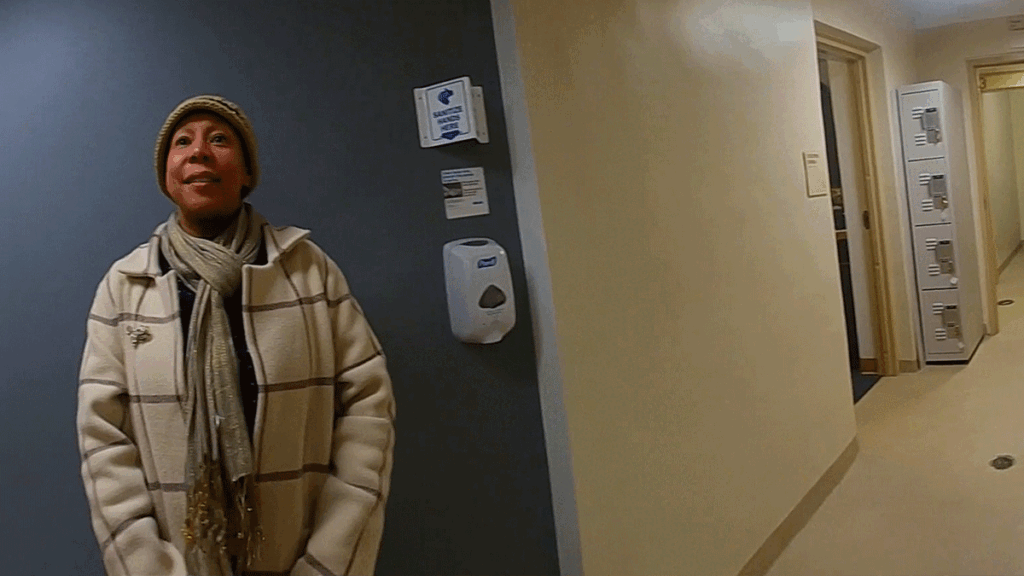
Star Francis was processed at the Atlantic Highlands Police Department and later released to a sober party. Her vehicle was impounded under “John’s Law,” which mandates a 12-hour hold on vehicles involved in DWI cases.
She is currently awaiting a court appearance in Highlands Municipal Court to face these charges.
Download Police Report click here.
Disclaimer: All suspects are presumed innocent until proven guilty in a court of law. This report is based on official police records.
Don’t Rely on Their Word Alone In this case, conflicting stories led to an arrest. The only way to prove your innocence in a traffic stop is with your own 4K evidence. Protect yourself this holiday season. 🎄 Click Here