


On the early morning of June 7, 2025, the quiet streets of Highlands, New Jersey, were shattered by the wail of sirens and the blare of a car horn during a tense standoff that is now capturing public attention. What began as a routine traffic stop for a driver running red lights quickly spiraled into a dangerous high-speed pursuit and a physical confrontation in a residential driveway. The incident involves a local woman, Amanda J. Peters, who allegedly led police on a chase before barricading herself in her vehicle and screaming at officers. The situation took a disturbing turn inside the police station when Peters, distraught and allegedly intoxicated, refused to cooperate with booking procedures and made chilling requests for the officers to use lethal force against her. This case highlights the unpredictable dangers patrol officers face and the complex intersection of substance use, mental health crises, and law enforcement protocols.
Table of Contents
Full Bodycam Video
Full Chronological Narrative (Full Details)
The Pursuit Begins
The incident started at approximately 3:25 AM while Sergeant McGrath of the Highlands Police Department was on routine patrol traveling southbound on State Route 36. Sgt. McGrath observed a black 2004 Honda Accord fail to stop at a traffic signal, turning left off Orchard Avenue while the light was red.
Hoping it was a simple mistake, the officer followed the vehicle. However, the driving became more erratic. As the Honda entered the Linden Avenue jug handle, it swerved around another car in the right lane and blew through a second red light. At this point, the driver accelerated, speeding down Linden Avenue. Sgt. McGrath activated his emergency overhead lights and sirens, signaling the driver to pull over.
Instead of stopping, the driver—later identified as Amanda J. Peters—ignored the emergency signals. She drove through a stop sign at the intersection of Linden and Waterwitch Avenue without braking. The pursuit continued as she turned onto Shore Drive, still refusing to stop. Sgt. McGrath noted that the vehicle was failing to stay in its lane and was traveling at a “reckless speed” down the residential road.
The Driveway Standoff
The chase came to an abrupt end when the Honda pulled into a driveway at a dead-end street. Rather than surrendering, the situation immediately escalated. As Sgt. McGrath exited his patrol car, Peters began to “blare her car horn continuously,” creating a chaotic scene in the quiet neighborhood.
Sgt. McGrath approached the driver’s side. Because Peters had parked extremely close to an exterior staircase, the officer could not fully open the door or easily reach her.
The bodycam transcript captures the intensity of the moment as officers screamed for compliance:
Officer: “Get out of the car! I’m trying to stop you. Get out of the car!” Officer: “Get out of the car right now! Right now! Get out!”
Peters refused to comply. Sgt. McGrath managed to grab her wrist through the open window or door gap to try and physically remove her, but she pulled her arm away and continued honking the horn.
Peters: “I swear to God, I stepped out of the car… Please get out of the car! For both of our sakes, right now!”
Her statements became confusing and frantic. At this moment, a man came out of the house. He was identified as Frank Gardini, the homeowner and Peters’ boyfriend. He also tried to tell her to get out.
Gardini (suspected): “Get out of the car! Sit in the… I don’t care whose house is it? Get out of the car!”
The Struggle and Arrest
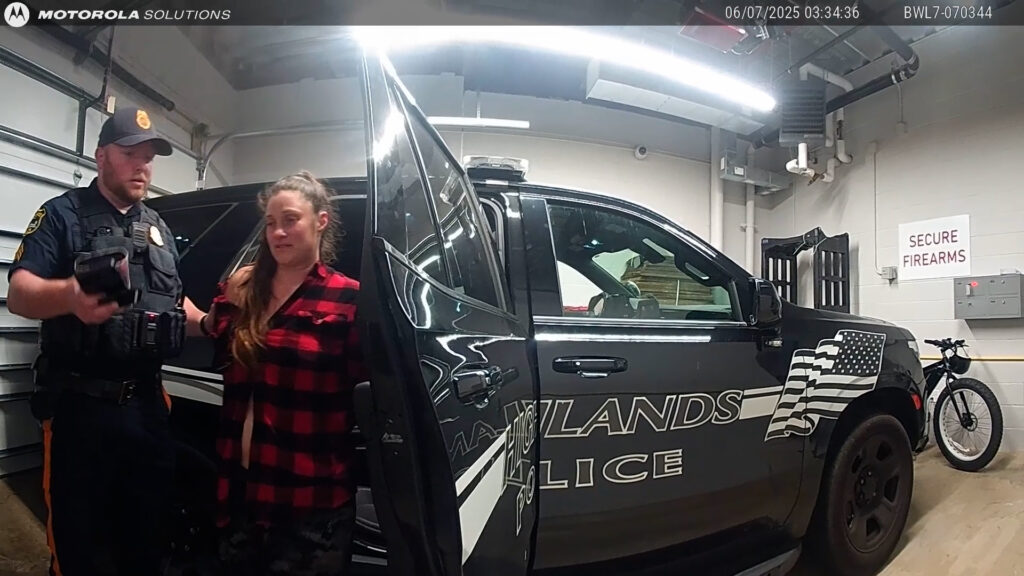
The arrival of backup officers, Patrolman Connor and Patrolman Alvator, tipped the scales. The officers detected a strong odor of alcoholic beverages and burnt marijuana coming from the vehicle and from Peters herself.
When officers finally pulled her from the vehicle, she actively resisted. According to the police report, she began pulling her hands away and “balling her shirt up in her clenched fists” to prevent the officers from applying handcuffs.
Officer: “Unclench your fist right now.” Peters: “I’m not clenching.” Officer: “You are. You’re holding your jacket, dude.”
During this scuffle, the sergeant’s body camera was knocked off his vest, though he quickly re-secured it. Once handcuffed and placed in the back of the patrol car, Peters’ mood shifted from aggressive to despondent. She began crying and rambling about deceased family members.
Peters: “Family members of you… Your mom, your dad, your mother, your sister… Everybody you know… Blowing your fucking head out.”
Back at the Station: Failed Tests
Sgt. McGrath transported Peters to Police Headquarters for processing. During the drive, he noted her speech was slurred and broken by crying. Once at the station, the officers attempted to conduct Standard Field Sobriety Tests (SFSTs).
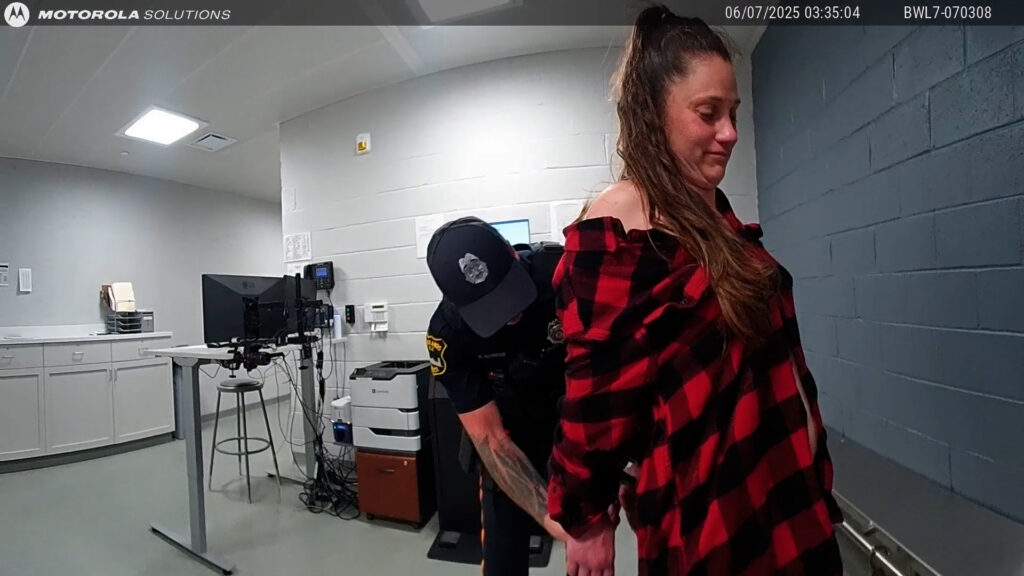
1. The Eye Test (HGN):
The officer checked her eyes for nystagmus (involuntary jerking). He observed that her eyes were bloodshot and watery. She showed “lack of smooth pursuit,” failing the test with 4 clues of impairment. Peters struggled to focus and began crying again.
2. The Walk and Turn:
Before starting, Peters claimed she had a medical issue.
Peters: “I do have a, issue with my equilibrium, though.” Officer: “Okay. I’ll take that into account.”
Despite the explanation, she failed to follow instructions. She took 14 steps instead of the required 9, did not touch heel-to-toe, and raised her arms for balance.
3. The One Leg Stand:
This test was stopped early for her safety.
Officer: “Lifted approximately six inches off the ground. Keep both legs straight… count out loud.” Peters raised her arms and almost fell over immediately. The officer ended the test to prevent her from injuring herself.
The Emotional Breakdown
The situation reached its most disturbing point during the reading of the Miranda Rights. Peters became highly agitated. When asked to sign the form acknowledging her rights, she refused and made a shocking statement to Sgt. McGrath.
Peters: “Why don’t I just charge you so that you can shoot me.”
Recognizing she was a danger to herself, the officer removed the pen from her hand. She continued to interrupt the officers, refusing to cooperate with the breathalyzer or further processing.
Peters: “Why don’t they just charge you right now to shoot me?”
Due to her erratic behavior, “thrashing about,” and mental state, the police decided she could not be safely held in a jail cell.
Charges Filed Against Amanda J. Peters
Based on the police report, Amanda J. Peters faces serious criminal and traffic charges. The officers issued the following citations:
- DWI (Driving While Intoxicated)
- Eluding a Police Officer
- Resisting Arrest
- Reckless Driving
- Failure to Observe Traffic Signals (Multiple counts)
- Failure to Stop at a Stop Sign
Legal Explanation of Charges
| Charge Name | Simple Legal Meaning | Why Officers Applied This |
| Eluding (2C: 29-2B) | Running away from police after they signal you to stop. This is a felony-level crime in many states. | Peters did not stop when the officer turned on his lights and sirens. She continued driving until she reached a dead end. |
| Resisting Arrest (2C: 29-2A) | Fighting against police or refusing to be handcuffed during a lawful arrest. | She refused to exit the car, pulled her arms away, and clenched her fists to stop officers from handcuffing her. |
| DWI (39:4-50) | Operating a vehicle while impaired by alcohol or drugs. | Officers smelled alcohol and burnt marijuana. She admitted to smoking weed, failed sobriety tests, and had slurred speech. |
| Refusal / Obstruction | Preventing officers from doing their job (like administration of law). | She refused to sign forms and physically resisted being benched at the station. |
Why this is serious: Eluding is often the most severe charge here. In New Jersey, eluding can be a second or third-degree crime depending on whether the flight created a risk of death or injury. By driving recklessly through red lights, Peters potentially put the public at risk, elevating the severity of her legal trouble.
What Happened Before Police Arrived
Unlike many cases that start with a 911 call from a concerned citizen, this incident was initiated directly by law enforcement patrol observations.
According to the report, it was 3:25 AM. The roads were mostly empty, which likely made Peters’ driving stand out even more. There were no reports of a domestic disturbance prior to the stop, although the interaction at the house suggests a complicated relationship between Peters and the homeowner, Frank Gardini.
When police questioned Gardini at the scene, he did not defend her driving.
Officer: “So you know her to do alcohol or drugs?” Gardini: “She’s Jamaican. She does.” Officer: “I think she’s drunk and or high.” Gardini: “Definitely.”
Gardini also confirmed to Sgt. McGrath that Peters “smokes marijuana regularly”. This witness statement from someone close to the suspect provides the prosecution with strong evidence regarding her habits, which supports the DWI charge.
Expert Legal Analysis
By the Evidence Decode Legal Team
In reviewing the transcript and police report for Incident 25HL03791, we analyze the legality of the stop, the arrest, and the handling of the suspect’s mental health crisis.
1. The Legality of the Stop (Fourth Amendment)
Under the Fourth Amendment, police need “reasonable suspicion” that a crime or traffic violation has occurred to pull someone over. In this case, Sgt. McGrath observed multiple clear violations: a red light violation, swerving, and a stop sign violation. These are objective, observable facts that make the initial attempt to stop the vehicle 100% legal. There is no gray area here for a defense attorney to argue the stop was unjustified.
2. Escalation to Probable Cause
Once the lights and sirens were activated and Peters refused to pull over, the situation escalated from a traffic stop to a criminal offense (Eluding). When officers finally approached the car, the “plain smell” doctrine came into play. The report states officers smelled “alcoholic beverage and burnt marijuana”. This, combined with her erratic driving and the witness statement from her boyfriend, provided overwhelming probable cause for a DWI arrest.
3. Use of Force and Protocol
The bodycam transcript shows a high level of verbal command before physical force was used. Officers gave numerous commands (“Get out of the car”) . The suspect was given ample opportunity to comply. When she refused, officers used “soft hand” techniques—grabbing wrists and pulling. This is generally considered the lowest level of physical force necessary to effect an arrest when a suspect is passively or actively resisting. The officers did not appear to use excessive force (such as tasers or strikes) despite the chaotic situation.
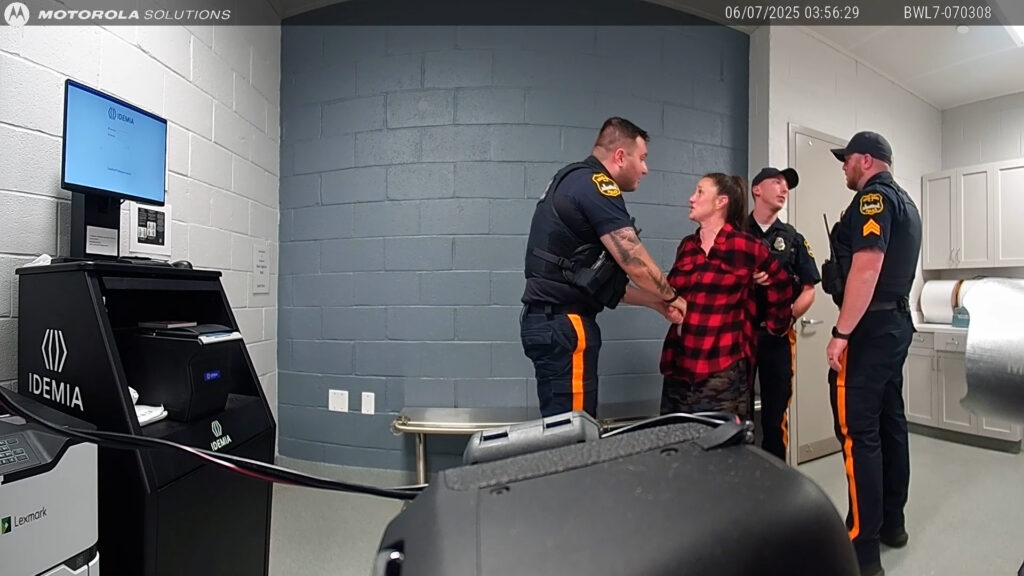
4. The “Equilibrium” Defense
During the field sobriety tests, Peters mentioned she had an “issue with my equilibrium”. A defense lawyer will almost certainly latch onto this. They will argue that her failure on the “Walk and Turn” and “One Leg Stand” tests was due to a medical condition, not intoxication. However, this defense is weakened by two factors:
- HGN Test: The eye test (HGN) is involuntary. You cannot “fake” the jerking of the eyes caused by impairment, and equilibrium issues usually don’t cause the specific nystagmus officers look for.
- Observations: The smell of alcohol/weed and her erratic behavior support the intoxication theory regardless of her balance.
5. Handling the Mental Health Crisis
The most critical legal decision made that night was not taking her to jail. When Peters began making statements like “Charge me so you can shoot me,” she triggered a medical protocol. Officers have a “duty of care.” If they had placed a suicidal suspect in a holding cell and she harmed herself, the department would be liable.
Sgt. McGrath correctly contacted the Assistant Prosecutor to get permission to issue a summons (ticket) and release her to medical care instead of booking her into a cell. This was the correct procedural move to protect both the suspect and the department.
Current Status
Amanda J. Peters was legally processed but physically transported to Monmouth Medical Center for evaluation and treatment.
Because of her medical admission, she was not held in the county jail. Assistant Prosecutor Carey Huff authorized the police to place Peters on a summons. This means she was given a court date and released to the care of the hospital.
She currently faces charges for:
- Eluding (2C: 29-2B)
- Resisting Arrest (2C: 29-2A(1))
- Driving While Intoxicated (DWI)
Her court date will likely be scheduled once she is discharged from medical care. If convicted of Eluding in New Jersey, she could face state prison time and a mandatory suspension of her driver’s license.
Download Full Police Report PDF
Footer Disclaimer
Disclaimer
All suspects mentioned in this article, including Amanda J. Peters, are presumed innocent until proven guilty in a court of law. This article is based on official police records (Incident 25HL03791) and public bodycam footage transcripts. This content is for news reporting and educational purposes only.