
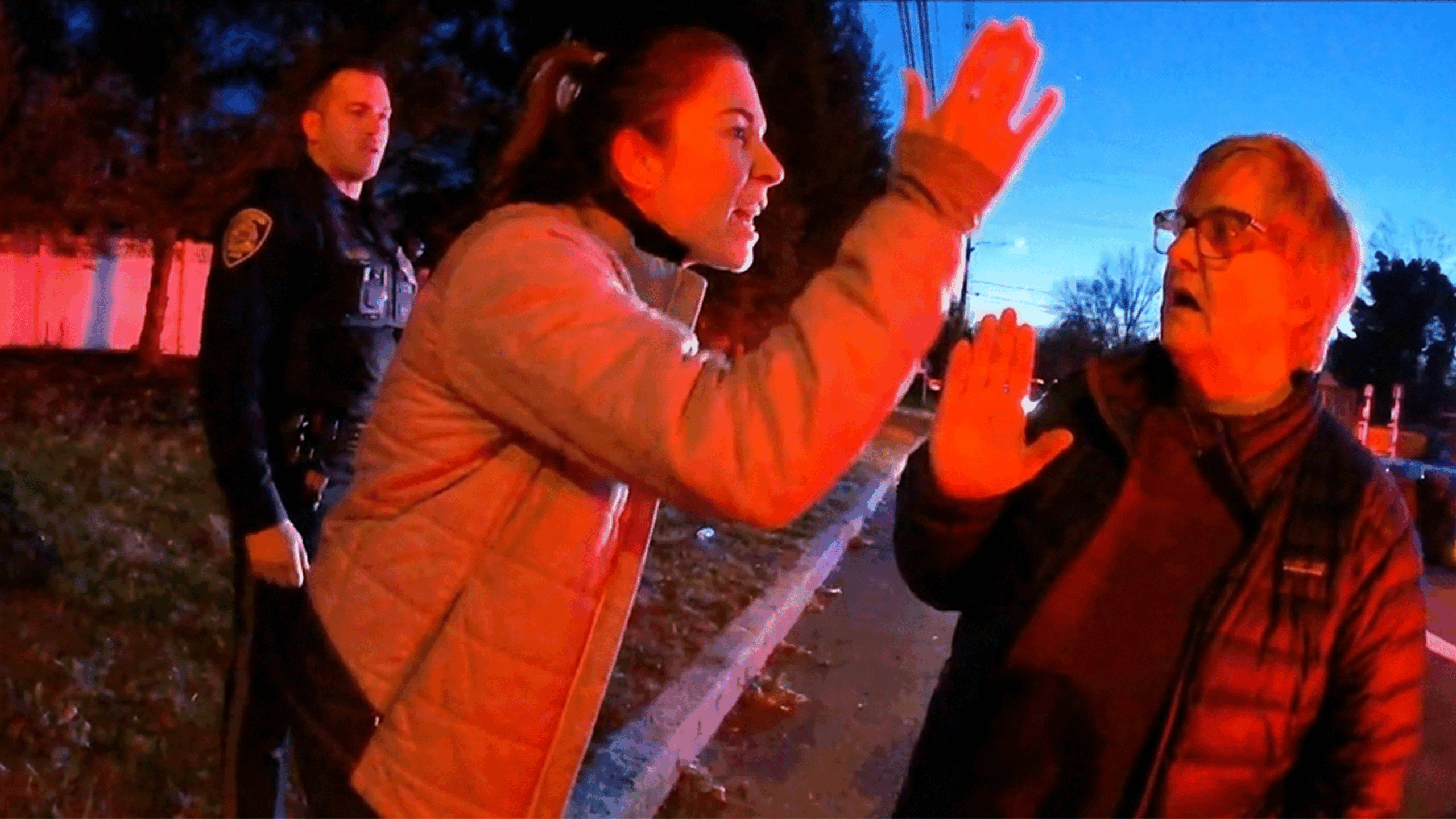

The Atlantic Highlands DUI Arrest of a 58-year-old woman turned into a legal nightmare after a simple “mistake” at a red light led to a multi-charge police investigation . On the afternoon of December 13, 2024, what began as a minor fender bender at Grand Avenue and Memorial Parkway quickly escalated into a criminal scene.
Table of Contents
Watch: Atlantic Highlands DUI Arrest Caught on Camera
Note: Pay close attention to the timestamp at 00:03:16 where the suspect’s daughter arrives on the scene and tells her mother, “I can’t even look at you”.
The “Tapped” Bumper: How the Incident Unfolded
The incident began at approximately 4:52 PM when a Black Jeep Grand Cherokee rear-ended a Black Ford F-150 stopped at a red light. Patrolman Jo LaBella arrived to find the vehicles on Grand Ave Northbound with minor damage to their bumpers.
The driver of the Jeep, Catherine Farrington, initially appeared dazed. When asked what happened, she told officers she “tapped” the vehicle in front of her because she thought it was moving forward.
However, the responding officers quickly noticed signs of impairment. Farrington’s speech was slurred, and a strong odor of alcohol was reportedly emitting from her vehicle. When asked to recite the alphabet, she stuttered at the letter “L” and eventually stopped at the letter “U,” unable to finish.
Under questioning, Farrington admitted to having “a couple of glasses of wine” with friends at the River Pointe Inn in Rumson during a “late lunch”. In a moment of candid honesty captured on bodycam, she rated her own level of intoxication as a “2 or 3” on a scale of 1 to 10.
Failed Field Tests and a “Mad” Daughter
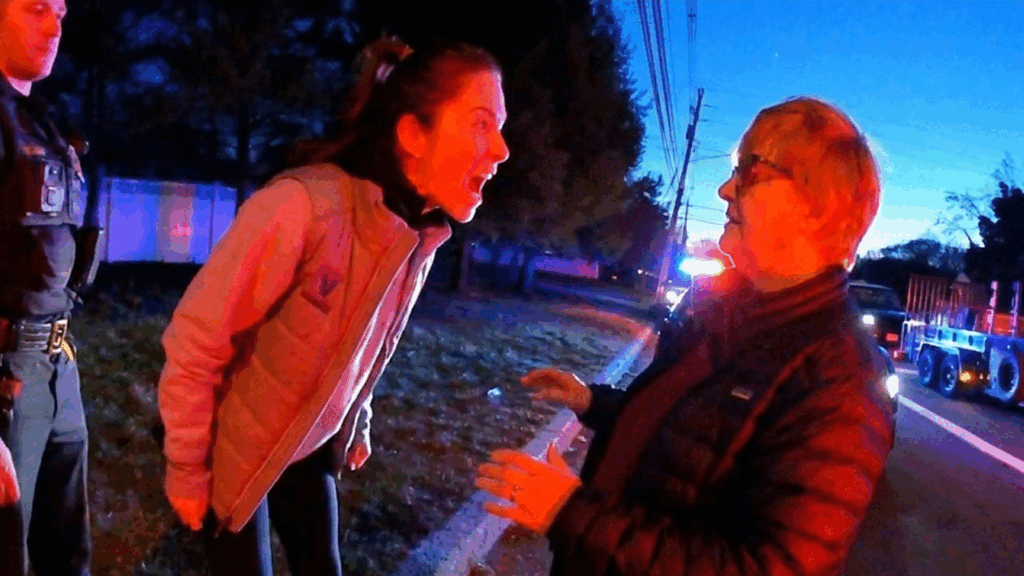
As the Atlantic Highlands DUI Arrest investigation continued, Farrington was asked to perform Standardized Field Sobriety Tests (SFSTs). The situation took an emotional turn when her daughter appeared at the scene.
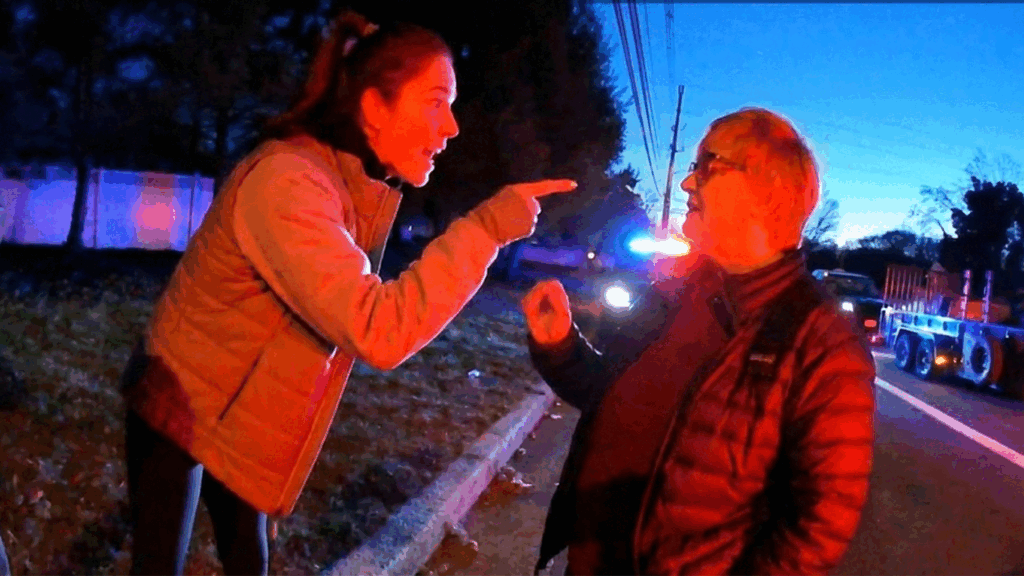
“I am so mad at you,” the daughter told her mother, begging officers to let her take Farrington home—a request that was promptly denied.
During the tests, Farrington struggled significantly:
- HGN Test: Officers observed distinct involuntary jerking in her eyes.
- Walk and Turn: She took 26 steps instead of the instructed 9 and failed to walk heel-to-toe.
- One Leg Stand: She lost her balance within two seconds and eventually stated, “Nope, I can’t do it”.
The Arrest: Charges Against Catherine Farrington
Following the failed tests, Farrington was placed under arrest and transported to police headquarters. The most critical moment of the Atlantic Highlands DUI Arrest occurred when she was asked to provide a breath sample. Despite being warned of the penalties, Farrington replied with a firm “No”.
| Charge | Simple Explanation | Potential Penalty (US) |
| 39:4-50 DWI | Driving while intoxicated | Fines, license suspension, IID installation |
| 39:4-50 Refusal | Refusing a breathalyzer test | License revocation up to 20 years, $2k fine |
| 39:4-97 Careless Driving | Driving without due caution | Points on license and fines |
| 39:4-96 Reckless Driving | Driving with willful disregard | Fines or possible jail time |
Legal Analysis: Was the Atlantic Highlands DUI Arrest Justified?
From a legal perspective, the officers followed standard New Jersey protocol for a DUI investigation. The initial stop was justified by the motor vehicle accident (the rear-end collision).
The “Refusal” charge is often the most difficult to fight in court. In New Jersey, “implied consent” laws mean that by driving on public roads, you have already agreed to submit to a breath test if arrested for DWI. Farrington’s “No” at the station triggered an automatic summons for refusal, which carries penalties separate from the DWI itself.
[Read more Evidence Decode investigations here]
Here are 5 Frequently Asked Questions (FAQs) regarding the legal procedures and implications connected to the charges in this case:
What is “John’s Law” and how did it affect this incident?
John’s Law (N.J.S.A. 39:4-50.22) allows police to impound a vehicle for at least 12 hours when a driver is arrested for DWI. In this case, the suspect’s vehicle was towed by Hennessey Towing and held according to this regulation. Additionally, the person picking up the suspect—in this case, her husband—must sign a form acknowledging they may be held liable if they allow the arrested person to drive again while still intoxicated.
Can someone be charged with a “Refusal” even if they didn’t drive away from the scene?
Yes. In New Jersey, if an officer has probable cause to believe a person was operating a vehicle while intoxicated, the driver is legally required to submit to a breath test under implied consent laws. During this incident, because the suspect allegedly rear-ended another vehicle and showed signs of impairment, she was required to provide samples. Her verbal “No” at headquarters resulted in a separate “DWI Refusal” charge.
What is a “Last Drink Report” and why was it filed with the ABC?
A Last Drink Report is a document police file with the Division of Alcoholic Beverage Control (ABC) when a DWI suspect identifies the specific establishment where they consumed alcohol. Since the suspect stated her last drink was at the River Pointe Inn in Rumson, the officers were required to notify the ABC Investigations Bureau. This is used to track businesses that may be over-serving patrons.
Why did the officer perform an “HGN” test if the suspect complained of no pain?
The Horizontal Gaze Nystagmus (HGN) test is used to detect involuntary jerking of the eyes, which is a common indicator of chemical impairment. Even though the suspect stated she was “fine” and not in pain from the accident, the officer used the HGN test to check for “lack of smooth pursuit” and “distinct nystagmus,” which are physical signs that cannot be voluntarily controlled.
What happens if a suspect signs a Miranda waiver but later stops answering questions?
Under Miranda Rights, a suspect has the right to withdraw their waiver at any time during questioning. In this case, the suspect initially signed the waiver and agreed to answer questions, stating she was an “honest person”. Had she decided to stop talking later, the officers would have been legally required to cease the interrogation immediately.
Conclusion & Current Status
Catherine Farrington was released into the custody of her husband, Edgar, after he signed a potential liability form in accordance with John’s Law. Her vehicle was impounded for the mandatory 12-hour period.
Farrington is scheduled to appear in Atlantic Highlands Municipal Court on January 14, 2024 (likely a clerical error in the report intended for 2025/2026), to face multiple summonses.
Download Police Report click here.
Disclaimer: All suspects are presumed innocent until proven guilty in a court of law. This report is based on official police records and transcriptions.
Don’t Rely on Their Word Alone In this case, conflicting stories led to an arrest. The only way to prove your innocence in a traffic stop is with your own 4K evidence. Protect yourself this holiday season. 🎄 Click Here