


On November 1, 2023, officers from the Deal Police Department in New Jersey initiated a traffic stop that quickly escalated into a Driving While Intoxicated (DWI) investigation. The incident occurred in the early morning hours on Norwood Avenue when an officer noticed a vehicle behaving erratically. The driver, identified as Amanda L. Addotta, was pulled over after allegedly stopping her vehicle in the middle of the roadway rather than pulling to the side. This case has drawn attention due to the driver’s confusion regarding police commands, her admission to consuming “shots” of alcohol, and her questions about the legal requirement to exit her vehicle. The following report details the step-by-step breakdown of the arrest, supported by official police documents and bodycam transcripts.
Table of Contents
Watch the Full Bodycam Footage
Full Chronological Narrative (Full Details)
The Initial Stop
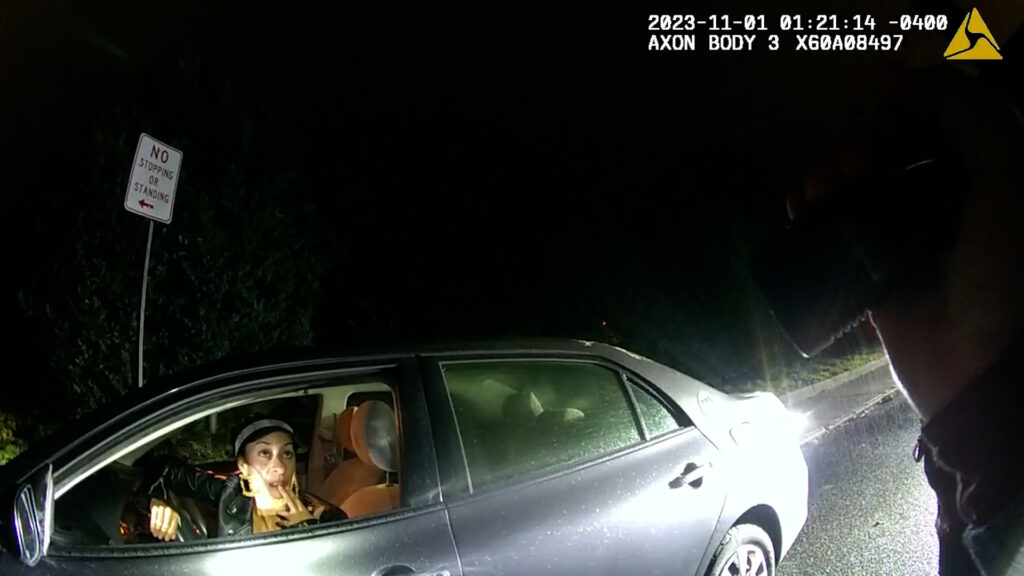
The incident began at approximately 1:10 AM on November 1, 2023. Officer Jenifer Velasquez of the Deal Police Department (Badge #144) initiated a motor vehicle stop in the North Zone of the borough. The officer observed a gray 2011 Toyota Corolla and activated her lights.
Rove R2-4K Dash Cam

Capture Proof. Protect Yourself
- 4K Ultra HD Video
- Super Night Vision
- Built-in WiFi & GPS
- 150° Wide Angle
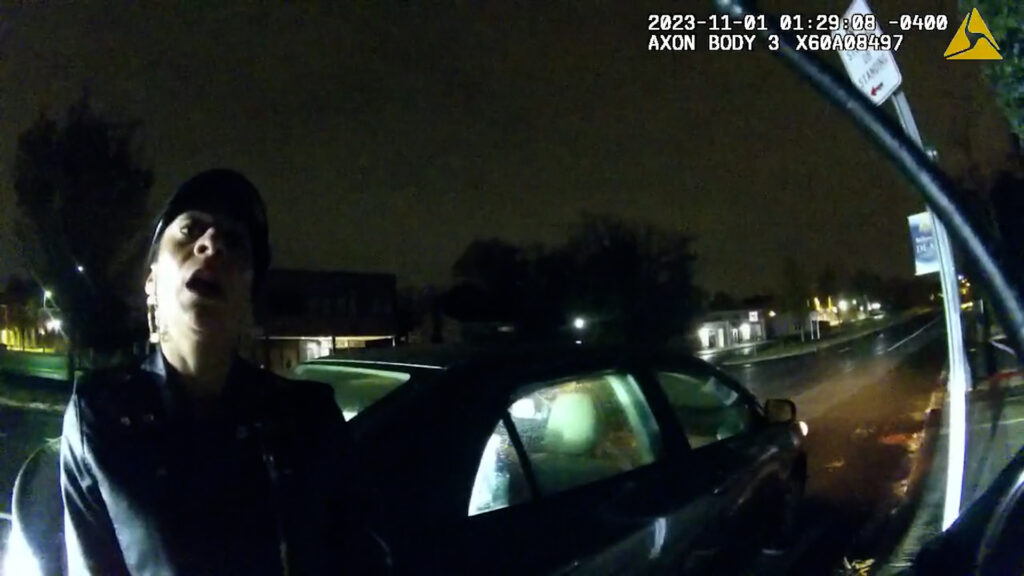
Upon approaching the vehicle, the officer asked the driver, Amanda Addotta, where she was coming from. Addotta replied that she was coming “From Asbury” and was heading back home to Long Branch. The officer immediately began a document check, asking for license, registration, and insurance.
The Insurance Confusion
A significant portion of the initial interaction involved the driver struggling to produce a valid insurance card. The driver admitted, “I know I had to renew my rent… I have that,” confusing her documents. When pressed for current insurance, she attempted to show the officer a bank transaction on her phone as proof of payment rather than a valid insurance card.
Officer Velasquez noted the confusion, stating, “That’s actually a little bank transaction right there,” and informed the driver that the document provided was not valid proof of insurance.
Suspicious Behavior and Admissions
During this exchange, the officer asked a critical question regarding the driver’s operation of the vehicle: “Any reason why you stop in the middle of Norwood Avenue like this?”. The driver seemed confused, asking, “What’s stopping the left lane? Not to your right”.
Sensing potential impairment, the officer asked directly, “Did you have anything to drink tonight?”.
Addotta initially replied, “I had a vodka club. One drink”.
However, the officer pressed further, asking, “Any shots? Anything like that?”.
The driver then admitted, “Actually, yes”.
The officer candidly told the driver, “You’re kind of all over the road. That’s why I pulled you over today”.
BACtrack S80 Breathalyzer

Don’t Guess. Know Your Limit Instantly.
- Police-Grade Accuracy
- One-Touch Operation
- DOT & NHTSA Approved
- Fast Results
The Order to Exit the Vehicle
Officer Velasquez instructed Addotta to step out of the car to perform standardized testing. This led to a tense legal exchange. The driver asked, “Am I legally supposed to… like, what’s the problem?”. She expressed distrust, stating, “I come back a moment where I don’t trust cops”.
The officer remained firm, stating, “Absolutely, yes. Without question… Supreme Court”. This refers to the legal precedent allowing officers to order drivers out of a vehicle during a lawful stop. After some hesitation, Addotta complied and exited the vehicle.
Field Sobriety Tests (FSTs)
The officer conducted several tests on the roadside.
- The Eye Test (HGN): The officer instructed Addotta to follow the tip of a pen with her eyes only, without moving her head.
- The Walk and Turn: The officer instructed the driver to place her right foot in front of her left, heel-to-toe, and take nine steps, turn, and take nine steps back. The driver counted out loud, reaching nine, but the transcript suggests difficulty following the specific “heel-to-toe” instruction perfectly.
- The One-Leg Stand: The driver was asked to raise one foot six inches off the ground and count. Addotta counted to 30 but verbalized her anxiety, stating, “I’m nervous” during the count.
The Arrest
Following the tests, Officer Velasquez delivered her conclusion: “Listen to me, Amanda. You do not pass this test, okay? At this point, you’re going to be arrested for driving and being intoxicated”.
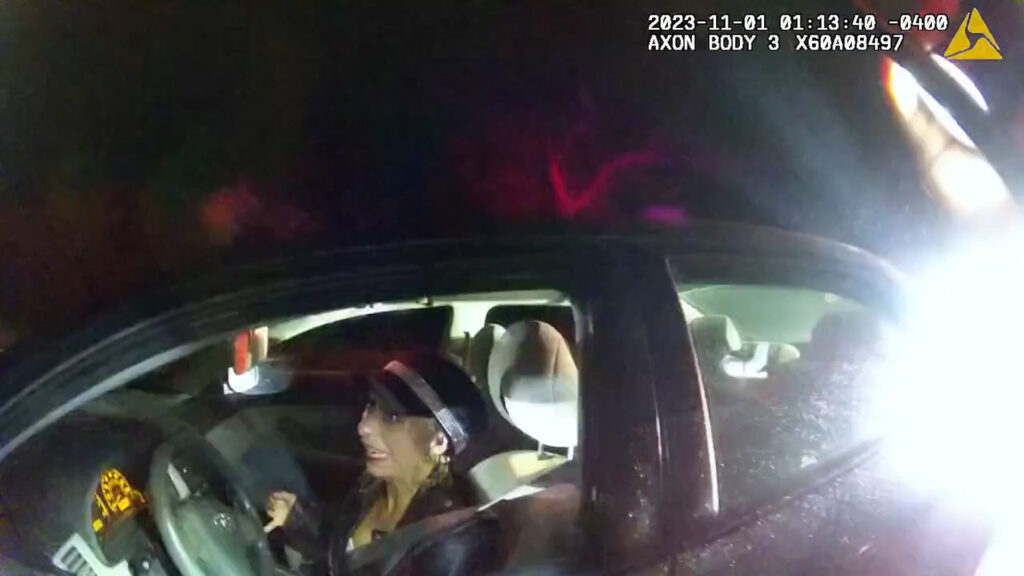
Addotta was handcuffed, and her personal items (phone, keys, and $20 cash) were secured. She was placed in the patrol vehicle, Unit 144, for transport to headquarters.
The Arrest and Charges
Charges Filed Against Amanda L. Addotta
Based on the police report and the events captured on video, the primary charge filed against the suspect is:
- DWI (Driving While Intoxicated).
Legal Explanation Table
| Charge Name | Simple Legal Meaning | Typical Penalties (NJ) | Why Officers Applied This |
| Driving While Intoxicated (DWI) | Operating a motor vehicle while impaired by alcohol or drugs. | License suspension, fines ($250-$400+), potential ignition interlock device, Intoxicated Driver Resource Center classes. | The driver admitted to drinking shots, was observed stopping in the middle of the road, and failed field sobriety tests. |
Why This Case is Serious
While this was a “cleared arrest” with no injuries reported, the behavior described—stopping a vehicle in the middle of a live roadway at night—poses a severe risk of collision. The officer explicitly noted the driver was “all over the road”. Additionally, the confusion regarding insurance documents and the initial denial of how much alcohol was consumed highlight the cognitive impairment often associated with DWI cases.
What Happened Before Police Arrived
911 Call and Prior Events
Unlike cases initiated by a civilian 911 call, this incident was “Self-Initiated” by the police officer. This means Officer Velasquez was on routine patrol when she observed the infraction directly.
Witness and Background Information
- Origin of Trip: The driver stated she was coming from Asbury Park.
- Destination: She was heading to her home in Long Branch.
- Driving Behavior: Before the lights were activated, the officer observed the vehicle stopping in the left lane/middle of Norwood Avenue, which is a traffic violation and a key indicator of impairment.
- Vehicle Status: The vehicle was a gray Toyota Corolla. During the stop, it was determined that the vehicle needed to be towed pursuant to “John’s Law,” which allows police to impound the car of a DWI arrestee. Brothers Towing was called to the scene.
Expert Opinion & Legal Analysis
As a legal analyst reviewing this case, several key procedural moments stand out regarding the Fourth Amendment and New Jersey state law.
1. The “Step Out” Order (Pennsylvania v. Mimms)
When the driver asked, “Am I legally supposed to?” regarding exiting the vehicle, the officer correctly referenced the Supreme Court. Under the U.S. Supreme Court ruling in Pennsylvania v. Mimms (1977), police officers have the authority to order a driver out of a vehicle during a lawful traffic stop for officer safety. They do not need probable cause of a crime to do this; the initial traffic violation (stopping in the middle of the road) is sufficient. The officer followed proper protocol here.
Arrest-Proof Yourself (Book)

Survive Police Encounters & Protect Your Rights
- Written by an Ex-Cop
- Know Your Rights
- What to Say & Do
- Avoid Common Mistakes
2. Probable Cause for Arrest
To arrest someone for DWI, an officer needs “probable cause.” In this case, the officer built this cause through a “totality of the circumstances”:
- Erratic Driving: Stopping in the middle of the roadway.
- Admission: The suspect admitted to drinking vodka and taking shots.
- Performance: The officer determined the driver failed the Field Sobriety Tests.
3. Miranda Rights and Implied Consent
Once at the station, the transcript shows the officer reading the suspect her Miranda rights (right to remain silent, right to an attorney). The suspect signed the waiver.
Crucially, the officer then read the New Jersey Standard Statement for Breath Testing. In New Jersey, driving is a privilege, not a right. By driving on NJ roads, you give “implied consent” to provide breath samples if arrested for DWI.
- The officer warned the suspect that refusing the test can lead to a separate charge and license revocation.
- The transcript indicates the suspect eventually answered “Yes” to submitting samples. This likely saved her from an additional “Refusal” charge.
4. Procedural Critique
The officers appeared to follow standard procedure. They secured the vehicle, ensured the suspect was not left on the road, and transported her for processing. The officer remained calm despite the suspect’s hesitation and arguments about the law.
The Aftermath / Current Status
Following the arrest on November 1, 2023, Amanda L. Addotta was processed at the Deal Police Department headquarters.
- Release: She was released later that morning. In DWI cases, the law requires the suspect to be released to the custody of a “responsible, sober adult.”
- Custody: The report indicates she was released to an individual named Jamie Acevedo.
- Vehicle: Her vehicle was towed and impounded for a mandatory 12-hour period under John’s Law.
- Outcome: The incident status is listed as “Cleared Arrest”, meaning the police portion of the investigation is complete, and the matter has been referred to the court system.
Download Full Police Report PDF
Disclaimer
All suspects mentioned in this article, including Amanda L. Addotta, are presumed innocent until proven guilty in a court of law. This article is based on official police records (Case #DPD2023-008544) and public bodycam footage. This content is for news reporting and educational purposes only.